Flow inspection and diagnosis
We test water movement from inlet to outlet and locate where flow slows or stops. That tells us whether the drain needs a cleaning, a small repair, or something more.
Yard drainage french drain service in Charleston, SC. Assessment, cleaning, and flow correction for drains struggling with heavy rain and clay soil.
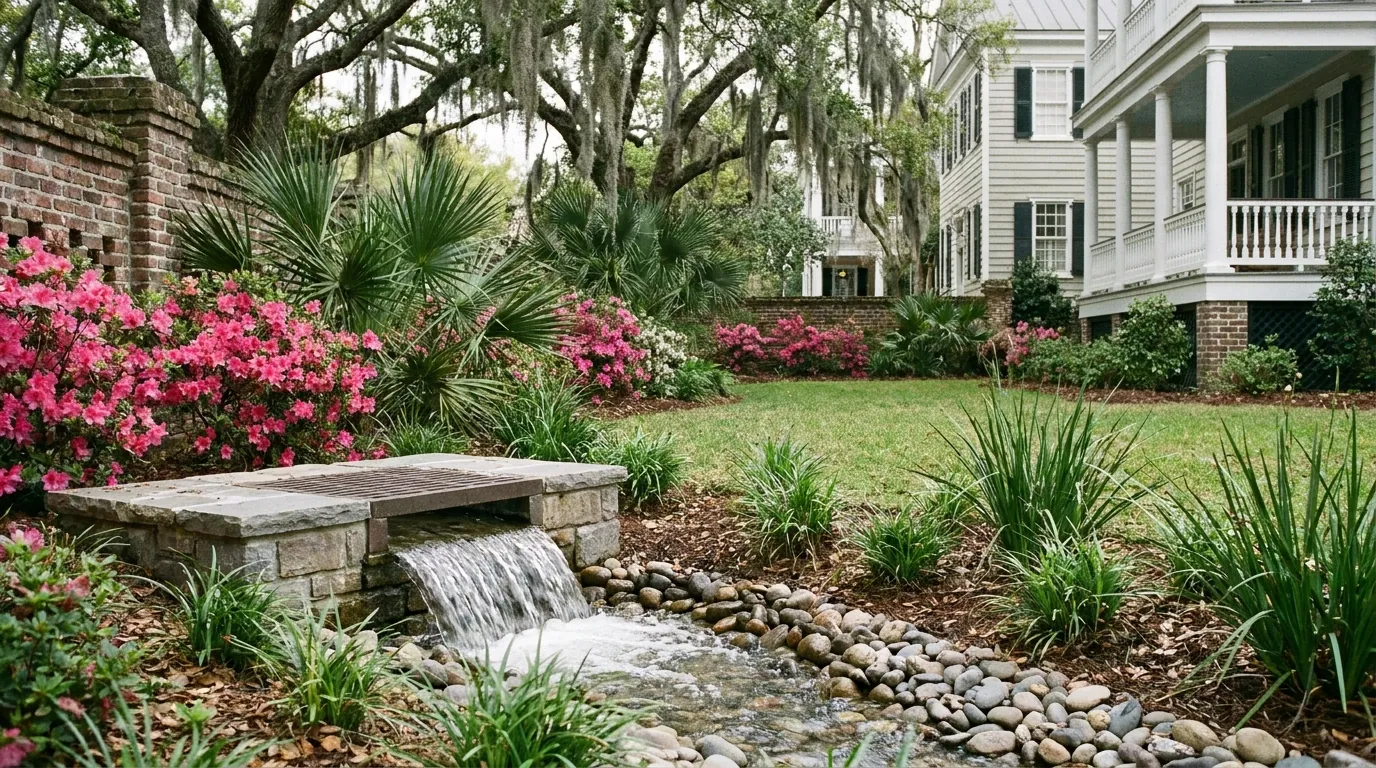
A french drain that worked for years can slowly lose its capacity, and in the Charleston area that decline often hides until a heavy summer downpour exposes it. Our french drain installation service work covers the whole life of the system: checking why an existing drain is underperforming, clearing what is blocking it, and correcting the small problems that turn into standing water. If you already have a drain but the low corner of the yard is soggy again, this is where to start.
The warning signs are usually easy to read once you know them. Water pooling over the top of a buried drain line, a spongy strip of lawn that never dries, mosquitoes breeding in a spot that used to drain, or an outlet that trickles when it should be running during rain — all point to a system that needs attention rather than replacement. Catching these early is far cheaper than waiting until the drain is fully blinded and water is backing toward the house.
Charleston's flat ground and clay-heavy soils make french drains work harder than they do in well-drained regions. Fine sediment migrates into gravel, roots find the moisture, and outlets silt over where the fall is shallow. A regular french drain installation service that inspects and clears these before they compound keeps the system doing its job through humid summers and heavy seasonal rain.
Service work is about restoring flow and heading off failure, not tearing the yard apart.
We test water movement from inlet to outlet and locate where flow slows or stops. That tells us whether the drain needs a cleaning, a small repair, or something more.
We flush accumulated silt and debris from the pipe and clear the outlet so water can leave the system cleanly instead of ponding back over the trench.
Most local drains fail at the ends. We clear silted outlets, reset grates, and make sure the discharge daylights where mowers and mulch cannot bury it.
If a drain is beyond cleaning, we explain what a [french drain repair](/services/yard-drainage-french-drain-repair/) or a fresh [french drain installation](/services/yard-drainage-french-drain-installation/) would involve so you can decide.
The Lowcountry sits low and flat, so french drains here often run with barely enough slope to keep water moving. That thin margin means even a light layer of silt in the gravel or a partially clogged outlet can be the difference between a working drain and a wet yard. Servicing these systems is largely about protecting that fall — keeping fine clay out of the gravel and the discharge point open.
Humid summers and long stretches of standing moisture also feed root growth and biological buildup inside the pipe. Shrubs, live oaks, and dense turf all send roots toward a consistently damp drain line. Periodic service catches root intrusion while it is still a few strands rather than a solid mass, which is a far smaller job than opening the trench.
Because our whole approach is grounded in these conditions, a service visit is also a chance to spot problems the yard hasn't fully shown yet. If you're weighing whether to service, repair, or replace, our french drain installation page walks through how a new system is built, and the about page explains how a call and site visit work.
If a drain you already have is losing the battle with Charleston's rain, reach out to schedule a look before the next storm.
Serving Charleston and nearby towns including Mount Pleasant, North Charleston, and Summerville.
There's no fixed schedule, but in the Charleston area a check every couple of years is reasonable given heavy rain and clay soil. If you notice pooling over the line or a slow outlet, have it looked at sooner rather than waiting for a storm to overwhelm it.
Often, yes. Silt in the pipe and a blocked outlet can frequently be flushed and cleared, restoring most of the drain's capacity. Whether cleaning is enough depends on how much fine soil has migrated into the surrounding gravel, which we assess on site.
Water standing over the buried line, a strip of lawn that stays soggy after others dry, and an outlet that barely runs during rain are the common early signs. Addressing these early usually costs far less than a full replacement.
Yes. Much of our service work is on existing drains of unknown age and design. We trace the line, test the flow, and diagnose the problem regardless of who originally installed it.