Assess water and find an outlet
We walk the yard during or after rain when possible, identify the wet zones, and locate where water can daylight or tie into an approved discharge. On flat lots this decides the whole layout.
French drain installation in Charleston, SC. New french drain systems designed for clay soil, flat lots, and heavy Lowcountry rain.
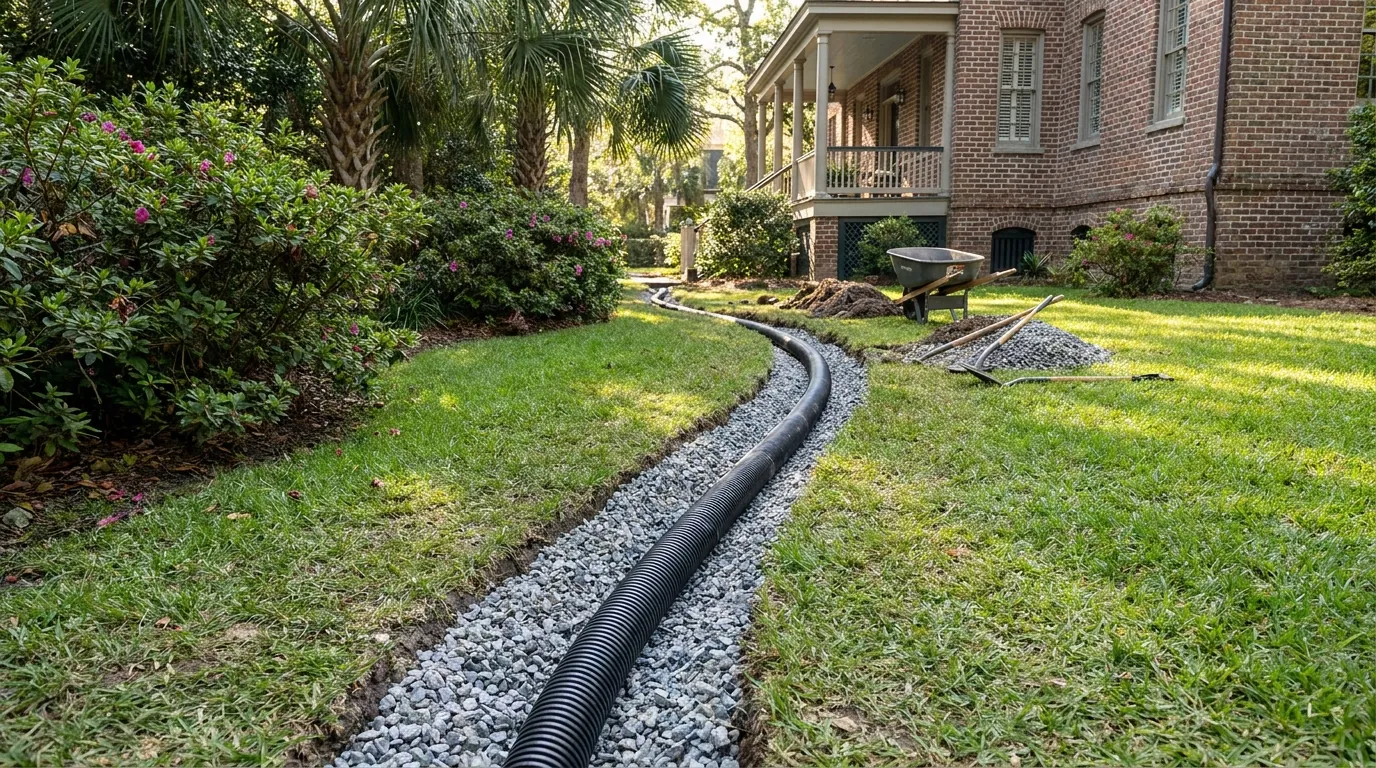
French drain installation is the right answer when water has nowhere to go — when a low corner floods every storm, a slope funnels runoff toward the house, or standing water sits on the lawn long after the rain stops. A well-designed french drain intercepts that water below the surface and carries it to a safe outlet. Done right for Charleston conditions, it's the most reliable of the yard drainage solutions for a persistently wet lot.
Not every wet yard needs a full system, and not every french drain installation looks the same. The layout depends entirely on where the water is, where it can go, and how much fall the site gives us to work with. That's why we start with the yard itself rather than a template. If your drain already exists and has simply stopped working, our french drain repair page covers fixing an existing system.
As a french drain installation service grounded in local ground conditions, we plan around the two things that make Charleston hard: heavy clay that holds water and flat terrain that gives a drain very little slope. Getting those two right is what separates a system that lasts from one that silts up in a few seasons.
Every yard is different, but a sound french drain system installation follows the same core steps.
We walk the yard during or after rain when possible, identify the wet zones, and locate where water can daylight or tie into an approved discharge. On flat lots this decides the whole layout.
We plan the trench to collect from the problem areas and fall continuously toward the outlet. Depth balances catching subsurface water against the shallow, wet ground common in the Lowcountry.
We dig the trench and hold a steady slope along its length, checking grade as we go so no section runs flat and traps water.
We line the trench with filter fabric, set a bed of clean gravel, lay perforated pipe, and cover it with more gravel. The fabric keeps fine soil out so the gravel does not silt up.
We build a clean daylight outlet or basin, backfill and fold the fabric over the top, then restore sod or a gravel surface and flow-test the finished drain.
Charleston's clay soil is the reason so many yards need french drains in the first place. Clay drains slowly, so rain that would soak away elsewhere lingers at the surface and builds up in low spots. A french drain gives that trapped water a fast path out, but the same clay that creates the problem also threatens the drain: fine particles want to migrate into the gravel. That's why filter fabric and clean, correctly sized gravel matter so much in a local french drain pipe installation.
The flat Lowcountry terrain is the second constraint. Where a hilly lot offers plenty of natural fall, many Charleston yards give a drain only inches of drop across a long run. That makes finding and protecting a real outlet the hardest part of the job — sometimes the drain must run to a street, a swale, or a dry well because there's simply nowhere lower nearby. We plan the whole system around that outlet, since a drain that collects water but can't discharge it just relocates the problem.
Heavy seasonal rain and humid summers finish the picture. The system has to handle intense bursts without overwhelming, and it has to resist the constant moisture that feeds roots and biological buildup. If you want to understand the money side before deciding, our guide on french drain installation cost breaks down the drivers, and the contact page is the place to arrange a site visit.
If standing water keeps coming back, reach out to arrange a site visit and a plan built around your yard's actual conditions.
French drain installation across Charleston and nearby towns including Goose Creek, Summerville, and Ravenel.
Cost depends on the length and depth of the run, how hard the digging is, and how far water must travel to reach a usable outlet. Flat lots that need a long run to daylight cost more than short runs with an easy discharge. Our cost article walks through the specific drivers.
Depth is set by the water you're trying to catch and the slope available, not a fixed number. In the Lowcountry, shallow water tables and flat ground often mean a shallower drain with careful grading works better than a deep one that can't reach an outlet.
It has to daylight somewhere lower — a street gutter, a swale, a ditch, or a dry well where nothing lower exists. Finding and building a reliable outlet is often the most important decision in a flat Charleston yard, because a drain with no exit just moves the problem.
A typical residential french drain is often a one- to two-day job, though long runs, difficult access, or complicated outlets extend that. We'll give you a realistic timeframe after seeing the yard and confirming where the water can discharge.