Yard Drainage & French Drains in Ravenel, SC
Yard drainage and french drain solutions for Ravenel, SC, where low rural terrain and clay soils leave standing water across yards and driveways.
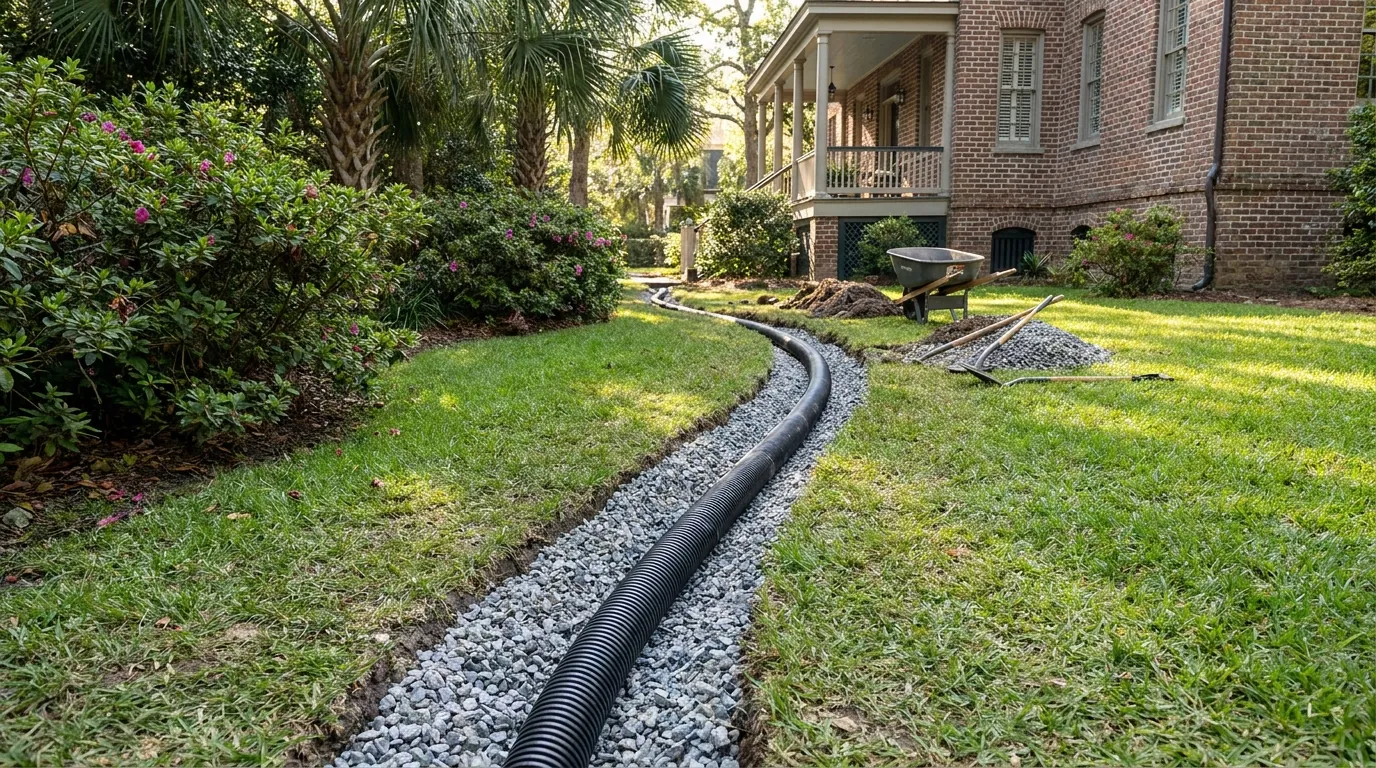
Drainage in Ravenel
Ravenel sits southwest of Charleston along the Highway 17 corridor, a small, rural community surrounded by farmland, timber, and the low, flat terrain that runs toward the ACE Basin and the region's tidal rivers. Like much of this part of Charleston County, Ravenel is low-lying and slow to drain. After the heavy seasonal rains that define the Lowcountry, standing water shows up across yards, driveways, and pasture edges and can take days to clear.
Properties here tend to be larger and less graded than city lots, which means water follows the natural lay of the land — often straight into the low areas people want to keep dry. A targeted yard drainage french drain installation intercepts that water and carries it away from the areas around the home and drive that matter most.
What Ravenel's soils and terrain mean for the work
Flat, low ground combined with clay-influenced soils is the drainage story in Ravenel. Water does not have a strong natural direction to travel, and the tight soil holds it near the surface. That is why a french drain here is planned around finding and holding onto whatever fall the land offers, then carrying water to a ditch, swale, or lower area that can accept it.
Because rain also tends to concentrate around driveways, outbuildings, and compacted areas, we look at how runoff moves across the whole property before placing a drain. Regrading a low spot and redirecting downspouts through our drainage service often works alongside the drain, and if an older system has stopped draining, our french drain repair service can find the blockage and restore it.
Handle standing water on your Ravenel property
Show us the areas that stay wet and how water moves across your land. We will map the fall and outlets and recommend a drainage plan that fits a rural lot.
Serving Ravenel and nearby rural Charleston County.
Frequently asked questions
Why does water stand so long across my Ravenel yard?
Ravenel is low, flat, and slow to drain, with clay-influenced soils that hold water near the surface. Without much natural slope, rain has no strong direction to travel, so it sits until the ground slowly releases it.
Can a french drain work on a large rural lot?
Yes. Rather than draining the whole property, a french drain targets the areas you want to keep dry, such as around the home and driveway, and routes that water to a ditch, swale, or lower area.
Where does the drainage water end up?
We look for the natural low points and outlets on your property — a roadside ditch, a swale, or a lower corner — and set the drain to carry water there while working with the land's existing fall.